Customer Journey Mapping for SEO Content
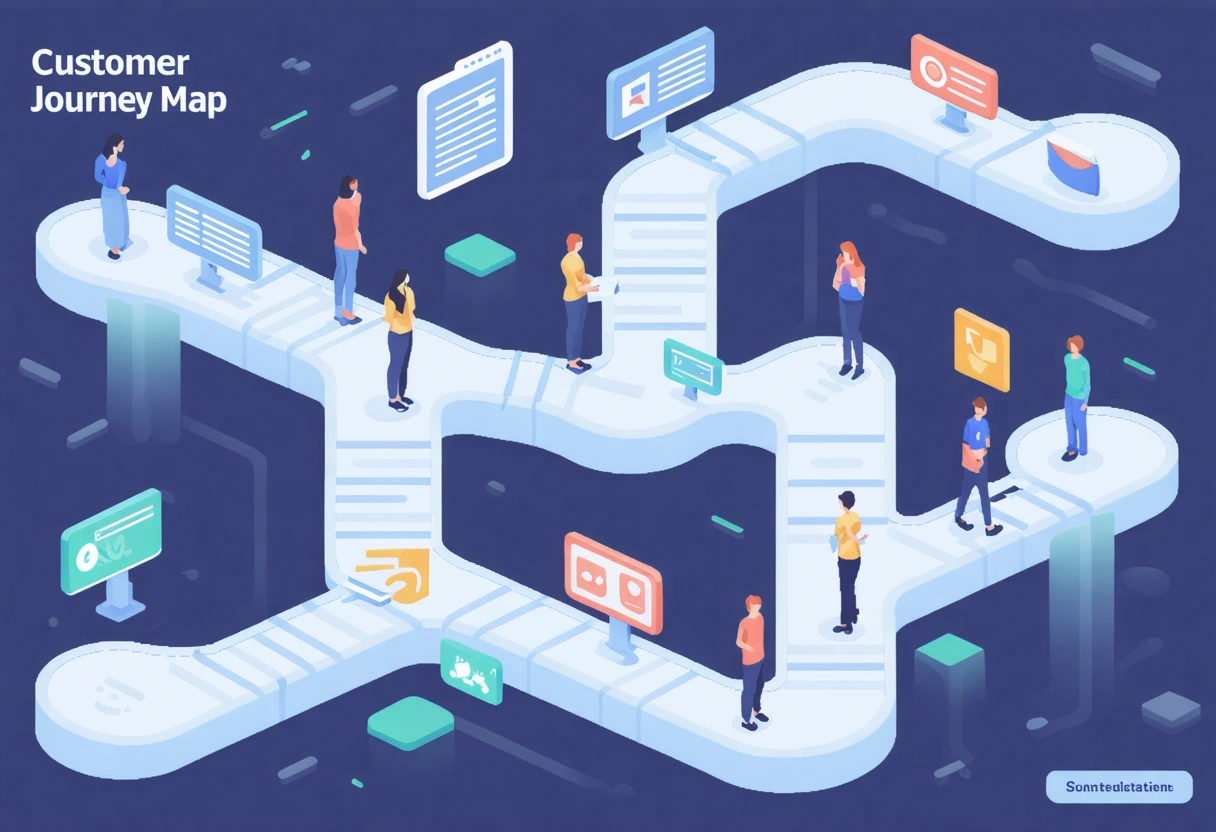
🔍 Understanding Customer Journey SEO for Ecommerce Success
In today's digital landscape, understanding how customers interact with your brand is no longer optional—it's essential for developing an effective SEO strategy. Customer journey mapping has emerged as a powerful tool that smart marketers and SEO specialists use to align content creation with the stages buyers go through before making a purchase.
This strategic approach doesn't just enhance user experience—it significantly boosts search engine performance by targeting the right keywords at every touchpoint in the ecommerce buyer journey.
What is Customer Journey SEO?
Customer journey SEO creates a detailed visualization of the path potential buyers take from discovering your product to making a purchase decision and beyond. In ecommerce especially, understanding this journey directly influences your content strategy, ensuring each piece of content addresses specific customer needs and expectations.
This process, often called SEO content mapping, allows you to identify gaps in your content ecosystem and align your SEO efforts with actual customer behavior rather than assumptions.
🛒 The Four Stages of the Customer Journey
The customer journey typically breaks down into several key stages, each requiring different content approaches:
- Awareness Stage: Potential customers recognize a problem or need and begin searching for information. They're not ready to buy yet. SEO content should focus on educational blog posts, how-to guides, and informational articles.
- Consideration Stage: Buyers compare products and weigh options. Content should include product comparisons, case studies, and detailed buyer's guides that evaluate different solutions.
- Decision Stage: Customers are ready to purchase. Focus on clear calls-to-action, product pages, reviews, and testimonials that remove doubts and facilitate conversions.
- Post-Purchase and Loyalty: Engage customers after purchase with tutorials, FAQs, and support content to foster loyalty, encouraging repeat business.
Mapping content to these stages is the essence of SEO content mapping, ensuring every piece meets unique customer needs throughout their journey.
💼 Why Customer Journey SEO Matters for Ecommerce
In ecommerce, the stakes are particularly high. The ecommerce buyer journey is rarely linear—customers jump between stages, consult reviews, seek discounts, and explore multiple product options across various platforms.
Without a properly mapped content strategy that resonates with this complex buyer path, you risk losing customers to competitors who provide the right content at the right moment.
Search engines have evolved dramatically in their ability to assess content relevance and quality. Google now emphasizes user experience and intent, rewarding websites that provide content aligned with specific journey stages. Focusing on customer journey SEO leads to higher rankings, more qualified traffic, and increased conversion rates.
🔧 Building an Effective SEO Content Mapping Strategy
Creating a robust SEO content map aligned with the customer journey involves several strategic steps:
1. Research and Understand Your Customers
Start with comprehensive buyer persona research. Identify who your customers are, what problems they face, and how they search for solutions online. Use tools like Google Analytics, SEMrush, or Ahrefs to analyze search queries, user behavior, and competitor keywords.
Understanding search intent—whether informational, navigational, transactional, or commercial—helps classify keywords according to the buyer's journey stage. For example, "how to choose running shoes" matches the Awareness stage, while "buy running shoes online" fits the Decision stage.
2. Map Keywords to Customer Journey Stages
Once you've compiled a keyword list, categorize terms based on where they fit in the ecommerce buyer journey:
- Awareness Keywords: Phrases like "what is," "how to," and "benefits of" that serve educational intent
- Consideration Keywords: Comparison terms like "best," "vs," "reviews," and product-specific queries
- Decision Keywords: Terms focused on transactional intent like "buy," "discount," "coupon," or "free shipping"
This segmentation enables you to design content suited to user needs at each stage and optimize each page for relevant search queries.
3. Align Content Types with Buying Stages
Different content formats work best for different stages:
- Blog posts and infographics are effective in the Awareness stage
- Product reviews, webinars, and case studies perform better in Consideration
- Product pages, landing pages, and special offer pages excel at the Decision stage
By aligning content types with the journey, you improve user engagement and boost important SEO signals—time on page, lower bounce rates, and higher conversion rates.
4. Audit Existing Content and Fill Gaps
Perform a content audit to assess your current assets. Identify which keywords or stages are underrepresented in your content inventory. This reveals opportunities for creating new content or repurposing existing materials.
For example, if you notice a lack of comparison guides or buyer's guides, create these to capture mid-funnel traffic. Similarly, ensure you have sufficient FAQ sections or after-sales support content for post-purchase retention.
5. Optimize On-Page SEO and Technical Elements
Customer journey SEO isn't only about keywords and content formats. Optimize metadata (title tags, meta descriptions), header tags, internal linking structures, and site speed to enhance content visibility and accessibility.
Implement schema markup where appropriate, such as product schema or FAQ schema, to increase the chances of rich snippets and better SERP presence.
6. Measure, Analyze, and Refine
SEO and customer behavior change over time, so continuously monitor performance using analytics platforms and SEO tools. Track metrics like organic traffic, bounce rate, time on page, conversion rates, and keyword rankings.
Gather insights and refine your customer journey mapping and SEO content strategy accordingly. If Awareness-stage content attracts traffic but doesn't convert, consider adding internal links to mid-funnel content or enhancing CTAs.
🚀 Benefits of Integrating Customer Journey Mapping with SEO
Integrating customer journey mapping into your SEO content strategy brings multiple advantages:
- Enhanced User Experience: Tailored content ensures visitors find exactly what they need at every stage
- Improved Search Rankings: Search engines reward relevant, user-focused content that satisfies search intent
- Higher Conversion Rates: Relevant content guides prospects smoothly through the buying process
- Efficient Resource Allocation: SEO content mapping helps prioritize content creation efforts
- Stronger Brand Loyalty: Post-purchase content nurtures relationships, encouraging repeat business
- Competitive Advantage: Brands that understand their customers' journey position themselves as leaders
🏪 Practical Example: Ecommerce Buyer Journey Applied to SEO
Let's illustrate with an online retailer specializing in home fitness equipment:
- Awareness Stage: A potential customer searches for "benefits of home workouts." The retailer's blog offers an in-depth article outlining health advantages, optimized for this keyword.
- Consideration Stage: The shopper looks for "best home treadmills 2024." The site features comparison guides and detailed buyer's guides.
- Decision Stage: Ready to buy, the customer searches "buy home treadmill free shipping." Product pages are optimized with strong CTAs, clear pricing, and reviews.
- Post-Purchase: After purchase, the retailer sends setup guides, maintenance tips, and workout plans to foster loyalty.
Through this tailored, keyword-aligned content strategy rooted in customer journey SEO, the brand captures leads at each stage while improving organic search visibility and conversions.
⚠️ Common Challenges and How to Overcome Them
Despite the clear benefits, many businesses face challenges implementing customer journey SEO:
- Complex Buyer Journeys: Ecommerce paths can be non-linear. Use omnichannel analytics and customer feedback to gain a unified view.
- Keyword Cannibalization: Multiple pages targeting similar keywords can confuse search engines. A well-structured content map prevents this by defining keyword focus for each page.
- Resource Constraints: Comprehensive mapping is time-intensive. Prioritize high-impact content areas and consider outsourcing or leveraging automation tools.
- Keeping Content Updated: Trends and products change. Establish a regular review schedule to maintain SEO performance and relevance.
- Technical SEO Issues: Content is only as good as its technical foundation. Invest in technical SEO audits to ensure your site is crawlable and fast.
🔧 Tools to Support Customer Journey SEO
To effectively implement customer journey SEO and SEO content mapping, leverage these technologies:
- Google Analytics and Search Console: Track user behavior and keyword performance
- SEO Tools: Ahrefs, SEMrush, Moz for keyword research and competitor analysis
- Customer Feedback Tools: Hotjar, SurveyMonkey to gather qualitative insights
- CRM Systems: Integrate customer data to understand real-world buying patterns
- CMS with SEO Plugins: Facilitate content updates and on-page optimization
📊 Conclusion: The Future of Ecommerce SEO
Customer journey mapping for SEO content isn't just a trend—it's an essential strategy for ecommerce businesses aiming to maximize organic search potential and deliver a seamless buying experience.
By understanding the ecommerce buyer journey and applying targeted SEO content mapping, you can create highly relevant, intent-driven content that attracts, engages, and converts users at every stage of their journey.
As search engines continue to evolve toward valuing personalized and user-centric content, mastering customer journey SEO will prove to be a decisive competitive advantage in the ecommerce landscape. By committing to this strategic framework, your SEO efforts become not just about visibility, but about meaningful engagement that drives sustainable growth.
Keeping up with SEO and AI answer requirements can be overwhelming. SalesPilot is an advanced seo extension that helps you analyze structured data, track content optimization, and measure how likely your site is to be selected by AI search engines. Stay ahead of competitors by letting AI optimize for AI.